 KitCut
S&P 500 Explained: one 18-minute research episode, five Shorts
- Audience
- People who invest their own savings
- Episode 1
- Cloudflare, 18 minutes
- Then
- 5 Shorts, one a day
- Narration
- A script, read word for word
- Evidence
- Filings, the company's pages, data
S&P 500 Explained is a new finance channel for people who invest their own savings: smart adults with day jobs, not Wall Street professionals. Each episode takes one big public company and answers why: how it makes money, what it costs, what management promised and what could go wrong. Its first episode, on Cloudflare, is 18 minutes long. It went up on 18 October; the five Shorts cut from it follow, one a day.
Episode 1: Cloudflare (NYSE: NET), 18 minutes.
An investor's research briefing, on screen
The channel's brief describes the format in one line: real evidence is on screen at all times. That means the company's own filings, its own web pages and its executives' own posts, third-party data pages, and precise charts of real numbers. Every fact card carries a small tag that says where it comes from:
| Tag | What it means |
|---|---|
| FILING | from the company's SEC filings |
| COMPANY | the company's own words or claims |
| DATA | a third party's data |
| OUR MATH | the channel's own arithmetic |
and a single source line at the bottom names whatever is on screen.
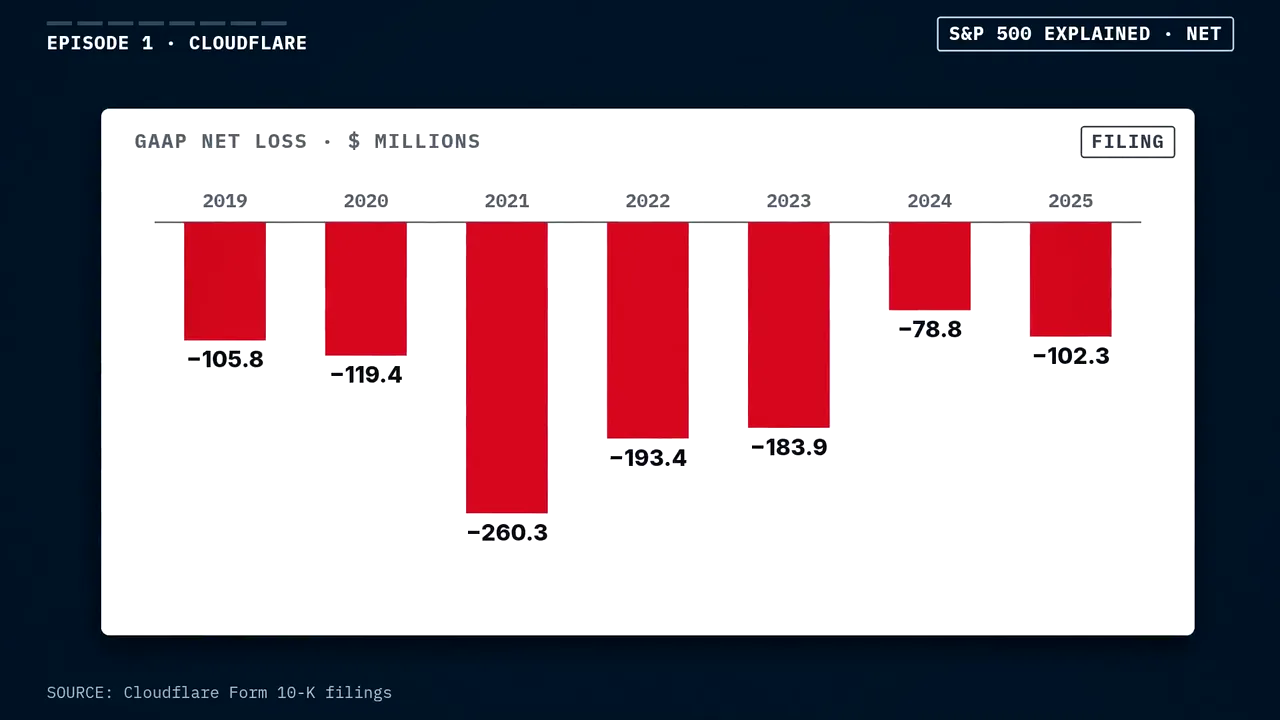
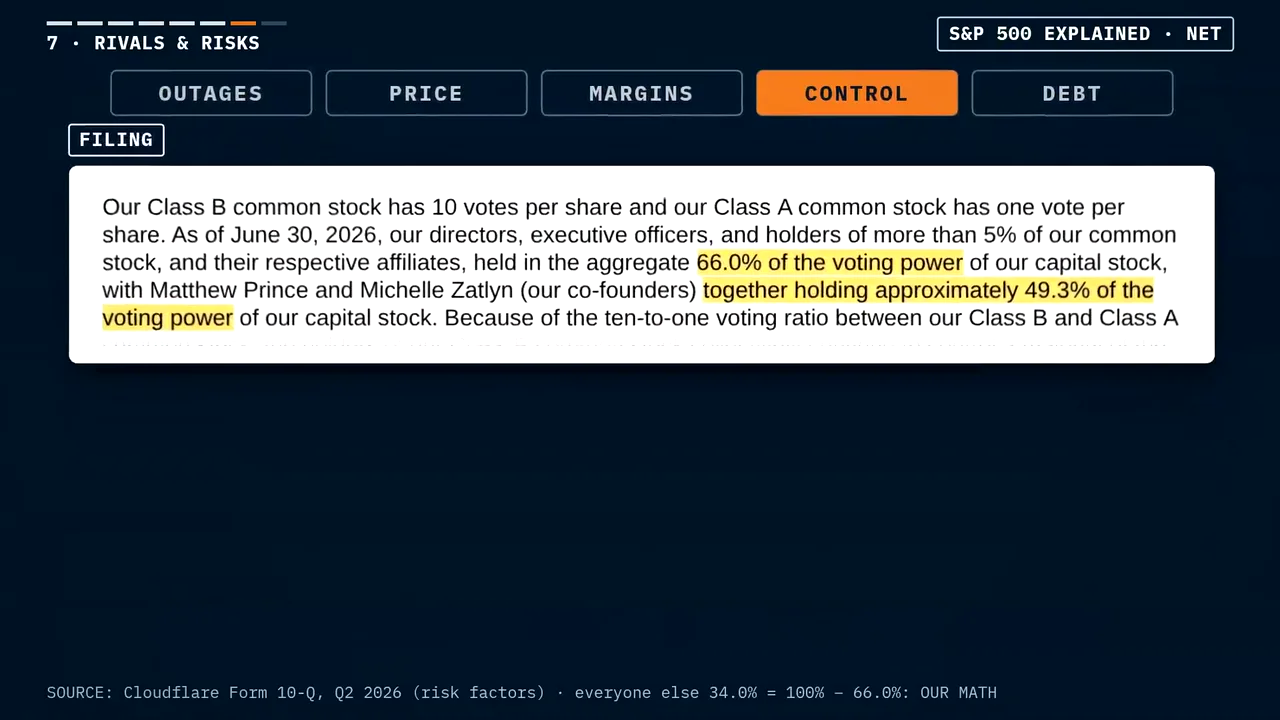
The documents are attached to the project as pictures: a page of the 10-K, the pricing page, the chief executive's posts, a third party's market-share data. They are shown exactly as they are, never redrawn or retyped, and the film pushes in on the line being read, never cropping through its text.
Balanced by design
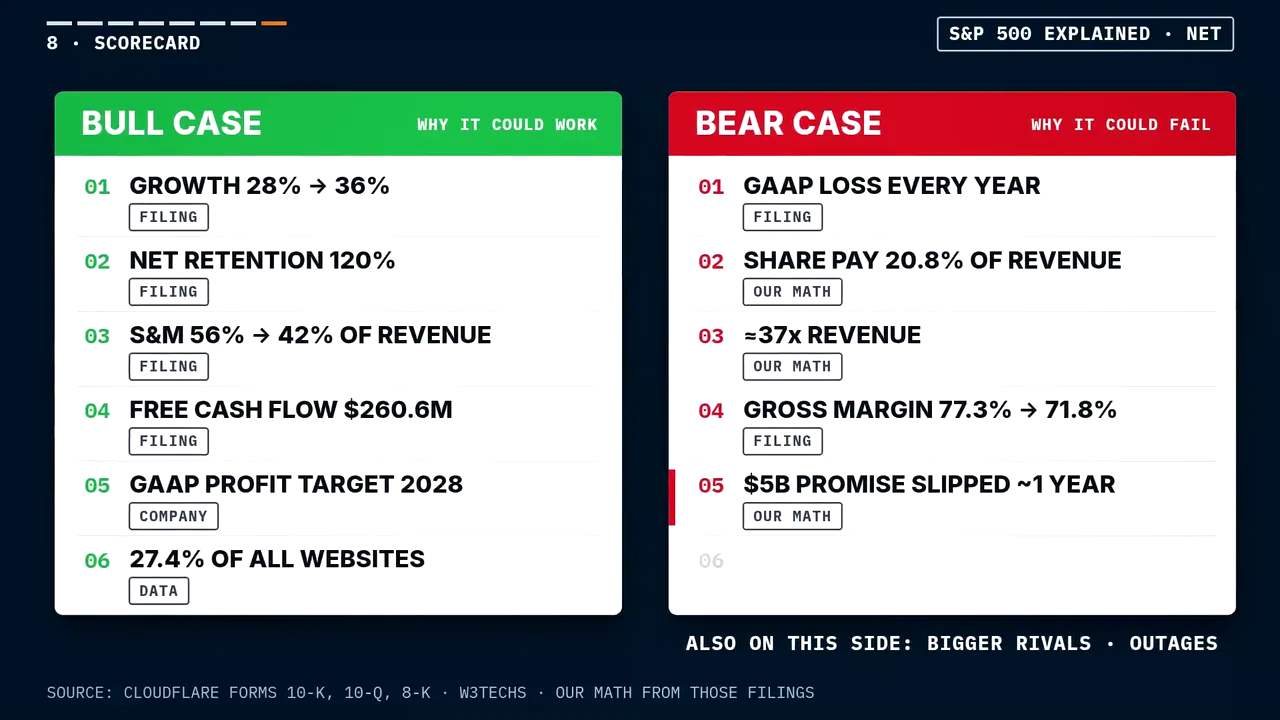
The brief makes the episode balanced, not just accurate. Every episode has a risks chapter and ends on a scorecard of the bull case and the bear case, each point tagged with its evidence. It never says buy or sell, never gives a price target, and ends on "Not investment advice."
A script, read word for word
Most KitCut films are written as they are made. This one's narration was finished first: a script, attached to the idea, which the film reads word for word, from "In this video:" to the last line. The film's job is the picture: the evidence for each line, the charts drawn as their numbers are said, and every highlight timed to the word it lands on.
Then five Shorts
Each Short is one idea from the episode, about a minute, tall for a phone, with its own short brief: "Free is the sales force", "Never a profit, worth a hundred billion", "The rule that keeps it out of the S&P 500", "The promise that slipped", "More than half the web isn't human". KitCut schedules them on the channel, one a day at the same hour, after the episode.
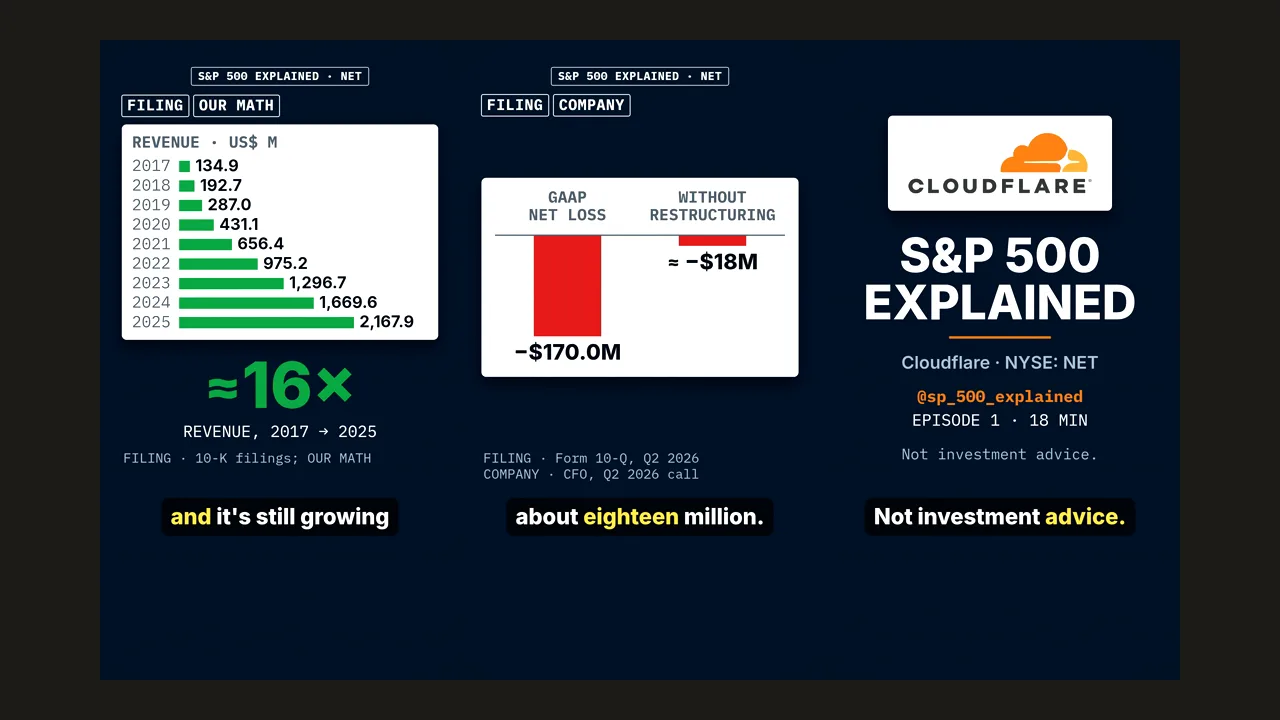
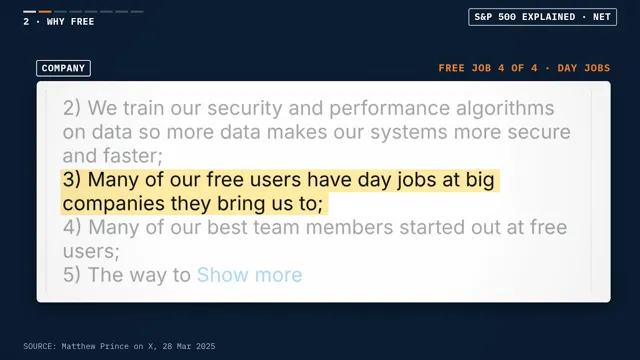 Cloudflare (NET) Explained: Why It Gives Its Product Away, and How It Still Gets PaidEpisode 1 · 18:01
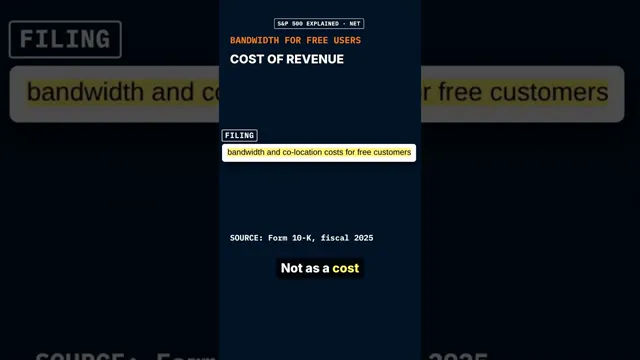 Why Cloudflare Gives Its Product Away for FreeShort 1 · 1:01
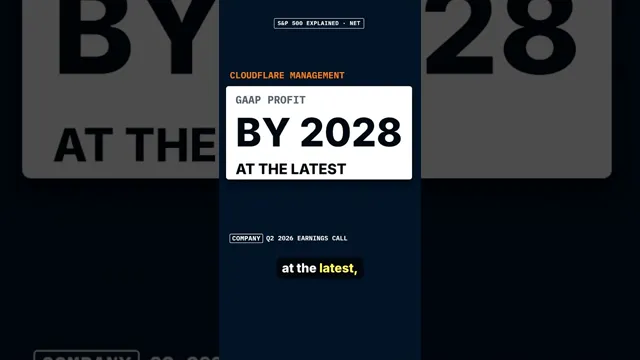
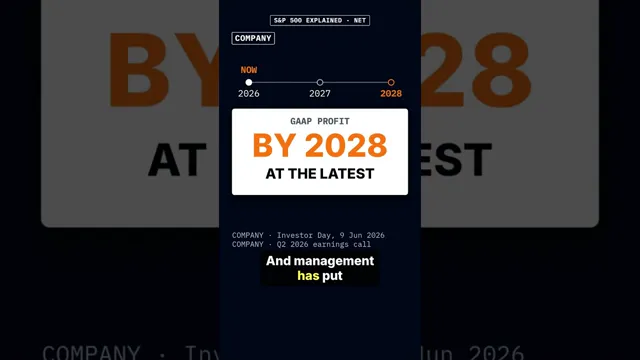 Cloudflare Has Never Made a Profit. Why Is It Worth $100B?Short 2 · 1:01
 Why Cloudflare Isn't in the S&P 500 (Yet)Short 3 · 1:01
What made it work
- Your words, KitCut's pictures. A script you trust can be the whole narration. The film's job is to put the evidence on screen at the moment each line needs it.
- Evidence tags. FILING, COMPANY, DATA and OUR MATH tell a viewer at a glance how much to trust a number.
- One episode, a week of posts. The research is done once; five Shorts reuse it.